Category: blog

  • Meet our Volunteers

    Each month, we are featuring interviews with the volunteer staff that make ATA possible, recognizing their work at ATA and their contribution to our vibrant artistic community.

    Here is the interview with Kelly Pendergrast, who is one of ATA’s programmers.
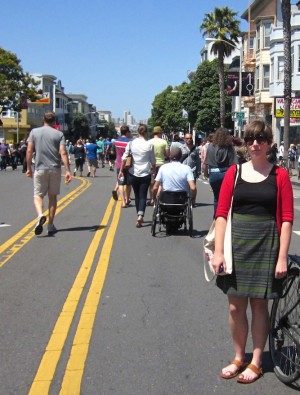

    KELLY PENDERGRAST

    Can you tell us a little about your background prior to volunteering at ATA?

    I’m from New Zealand and moved to California in 2005 to do my MFA.

    How did you first become involved with ATA?

    When I moved up to San Francisco I already knew I wanted to volunteer at ATA. I remember visiting SF and walking past a big huddle of people waiting to go into a show at ATA, and I thought it looked cool. Then it turned out a friend I met at grad school in San Diego was a long time ATA volunteer, and he totally sold me on it as an awesome space and great community.

    You are part of the programming team. What does your job as a programmer entail?

    It depends on the week. At the moment GAZE is taking over lots of my programming energy, but in general as a programmer I fill the inquiries from folks who are interested in screening their work at ATA as well as solicit work and programs from filmmakers I like. I work with the programming team to watch and select programs or pieces we think will work well, and then collaborate with the artists to plan and execute screenings. So: part curating, part admin, and part hassling filmmakers to send us their promo blurbs for the website…

    You are also co-curating the film series Gaze. Can you tell us what Gaze is all about?

    GAZE is a film series that screens moving image work made by women. That’s the short version. We run a quarterly screening series with an open & ongoing call for entries. We think that women are (still) underrepresented in the independent film and video world and now that the Bay Area is down one women’s film program with the end of MadCat, it’s important to have a space for the community of Bay Area women filmmakers. Speaking only for myself, I am sick of watching an endless parade of films by men (even men whose films I love) and I’m pretty invested in screening as many women filmmakers as possible.

    Why is ATA important to the community? And to you?

    ATA is maybe the only space in San Francisco where pretty much anyone can come in and screen their work to the public. We’re not snobs, we favor independent makers over big names, and we’re a little pocket of crusty weird resilience right in the middle of Valencia Street. For me personally, ATA is where I met some of my best San Francisco friends and discovered some of the best local filmmakers.

    What makes ATA a great place to volunteer?

    Meet people, learn stuff, see shows, and always have a place to pee when you’re in the Mission.

    What is the craziest or coolest thing you have seen at ATA so far?

    I have special fond memories of seeing Metal Rouge, Paul Clipson and (New Zealand compatriots) the Parasitic Fantasy Band putting on the most awesome expanded cinema/multiple projector/experimental soundz performance back in…. 2009? Also the 5th Annual ATA Film and Video fest where we handed out chromatic jello shots, smashed a piñata, and ordered a batch of chromadepth glasses for Kerry Laitala’s handmade 3D film.


    Volunteer with ATA!

    ATA is looking for volunteers to help with our Gallery and our Screenings. Volunteers run screenings, organize events, curate shows, and get stuff done. Volunteers can come to any ATA show for free. We need people who are creative and reliable.

    Email volunteer@atasite.org and become a part of something good.
  • Breakaway: notes on music video art

    The music video is an exceptionally fun form of video art. Collaborating with musicians allows video artists to make work that is at once experimental and accessible, breaking out of the gallery and entering the world of workaday humans in one stop motion leap. The Breakaway showcase of music videos by and and for Bay Area artists was fresh, contemporary, and inspiring. From fisheye lenses to elaborate sculptural props, to green monsters, yellow suits and wallpaper, and finally to Paul Clipson’s ethereal and poetic layered 16mm, the program ran the range of what moving image artists can do with the genre.

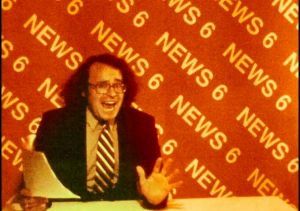
    Hannah Lew splashes her videos with the overbright camp of early MTV. “Toxic Revenge”, by Shannon & The Clams, features a perfectly greased 1980s newscaster and a vintage green monster who gently opens his mouth to devour a buxom diner waitress.

    Droves of citizens, some wearing only towels, flee the monster with that run that people do in music videos, where their pace is sped up, chopped up to match a driving guitar. “Private Room”, by Hunx, has a really extraordinary array of wallpaper, matching suits, and flower petals. Too much! (but in a good way… more is more).

    Where Lew had a real signature style, Gregory Downing’s work was more varied. Except for the addition of Santa Claus on the drums, “Snow Crash” by Glitter Wizard looked exactly like what you’d expect from a band of that name (i.e. glitter, glam, and a few disembodied heads). His concept for “The Crimson Blade” by Black Cobra, is totally different. Super high contrast, in black and white, the piece combines disorienting shots of the musicians with lurking shadows and implied zombiism. Again, this one is very genre, very metal.

    Rob Williamson’s video for Burnt Ones, “Meet the Golden One,” was quirky. For me it was sort of you-had-me-at-hello, because I’m a real sucker for lens flare, especially in a brown grassy field. Besides for a few tricky effects when the camera enters a dark hole (three times), the song is all done in one shot. There’s a huge cast, props, and a location that includes a maze of pebbles. The aesthetics are goofy– huge paper heads that sing along to the lyrics, a medicine man in a tent. Makes you wanna take your friends, go camping, make a music video.

    Wrong Words, “Wrong again” by Chris Anderson and Lily Chou was cute, but maybe that’s all. There’s a little story in it… the girl drummer gets a note from a secret admirer, then she tries on a lot of outfits that while her bandmates watch. Nice outfits.

    Owen Cook made lovely animations in “Boneyard” for Nobunny, but especially in “Shadow” for Grass Widow. His ink paintings are subtle and lovely… the shadow guy lives in a shadowy world with just enough information to let us know that its urban and gritty. I love the way he walks and the way he smokes. The shadows of parking meters move with the sun. Nobunny is a bad bunny who rides a motorcycle in search of a pretty girl and ends up in a graveyard. Whoops.

    The program ended with Paul Clipson’s piece for Young Moon “The Crystal Text”. After watching video for 45 minutes, super8 really knocks your socks off. The use of texture is so wonderful, whether its the bark of a tree or the layered film effects themselves. The choice of imagery combined with the music creates a gentle, rising nostalgia that makes you think of every afternoon when the sun peeked through the trees. My favorite image is the fingers and ferns.

  • Interview with SF Latino Film Festival Director Lucho Ramirez

    The third night of the SF Latino Film Festival is tomorrow. Come to ATA to see LGBT Latino shorts: Fallen Comrade, Recipe for Love and We’re All Meant To Be Queens /Todas Íbamos a Ser Reinas. You can get your tickets here.

    Why are you putting on this festival? How is it special for filmmakers? For filmgoers?

    The festival showcases Latino & Latin American film. It’s important for audiences to see and for filmmakers to have a platform for their work to be seen. A festival that focuses on this genre is more apt at showing titles both familiar and obscure- though in all honesty our programming is far from comprehensive. It’s special for filmmakers in that their work would not be seen otherwise.

    Putting on a film festival is a lot of work. Can you describe that work?

    It’s a long process that involves lots of planning and lots of testing. There’s no real short cut to go through a call for entry process. Plus there’s the raising of money to produce it, the strategy to market it, and outreach for support from other organizations and volunteers.

    How do you condense the annual output of the Latino film industry into a single festival?

    It’s really hard to approach it that way- to condense it all into a program of 20 or so features and another 15-20 shorts. However, we do look at the countries and genres represented to have wider range of voices and stories. We literally look at all the submissions, go through a screening committee, and then take it from there.

    In your opinion, is there anything that sets Latino cinema from the US apart from Latino cinema made abroad?

    Culture, history, language, and resources are a big part of what sets the films apart from the US. Some countries produce lots of film- like Argentina and Mexico whereas other countries have no real industry.

    The Festival is now entering its 4th year, how do you think it has grown? In what direction would you like to see it develop?

    We started at zero. No lists or followers. We went into it feet first without knowing if we would be able to garner an audience. It’s still challenging but now we are starting to get some traction.

    On Wednesday, Cine+Mas presents a night of LGBT Latino Shorts at ATA. This is the first time you have a program specifically for Latino LGBT short films. Why is this the year to do this?

    The LGBT community has been a big supporter of the festival overall and of films related to the Queer & Latino experience in particular. It made sense to aim to have more programming. This year we had multiple good submissions that it was enough for this to come to fruition.