Blog

  • Lonely Boys: Steve Reinke in the Company of Some Other Men Also featuring works by John Smith, George Kuchar & Joe Gibbons

    Steve Reinke¹s videos are raunchy pieces of questionable autobiography. With a knack for dredging timely cultural criticism from source texts as ubiquitous as The Oprah Winfrey Show and as outmoded as Heideigger, Reinke is also adept at wrangling his iTunes playlist to hit the proper pop cultural motif in the stomach. In this intermix, unlikely playmates like Pinnochio and anal stimulation are reintroduced as natural geneology. Reinke is not alone in this playing field. To supply context to his prolific videography, independent works by voice-over masters George Kuchar, John Smith and Joe Gibbons are also included. In this hour-long program, four lonely boys share the screen so that we might feast on the cruel enjoyment of their sour disappointments and revel in the odd tangents produced by their idiosyncratic relationships with narrative.

    Program of works

    Steve Reinke, Joke (version one), 1992. Video, color/so 04:56.
    Steve Reinke, Treehouse, 1995. Video, color/so, 03:55.
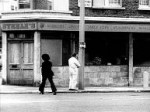
    John Smith, The Girl Chewing Gum, 1976. 16mm, b&w/so, 12:00.
    Steve Reinke, Amsterdam Camera Vacation, 2001. Video, color/so, 11:00.
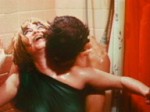
    George Kuchar, Hold Me While I¹m Naked, 1966. 16mm, color/so, 15:00.
    Steve Reinke, Understanding Heterosexuality, 1994. Video, b&w/so, 01:28.
    Steve Reinke, Pioneer, 1994. Video, b&w/so, 01:13.
    Steve Reinke, Assplay, 1995. Video, color/so, 01:36.
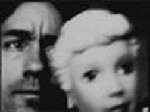
    Joe Gibbons, Pretty Boy, 1994. Pixelvision, b&w/so, 03:00.
    Steve Reinke, Corey, 1995. Video, color/so, 02:51.
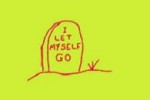
    Steve Reinke, Regarding the Pain of Susan Sontag (Notes on Camp), 2006. Video, color/so, 4:00.

    Steve Reinke is an artist and writer best known for his videos. His tapes typically have diaristic or collage formats, and his autobiographical voice-overs share his desires and pop culture appraisals with endearing wit. He is co-editor of the anthology The Sharpest Point: Animation at the End of Cinema and in has published a collection of his scripts entitled Everybody Loves Nothing. His work is screened widely and is part of several collections, including the Museum of Modern Art (New York), the Centre Pompidou (Paris), and the National Gallery of Canada (Ottawa).

    Sarah Robayo Sheridan is a Canadian writer and curator living in San Francisco. She has co-curated Learning to Love You More at MU (Eindhoven, 2007) and also presented Chris Marker¹s multi-screen installation The Hollow Men at both Prefix ICA (Toronto, 2006) and Daziboa (Montreal, 2006). She is currently completing an MA in Curatorial Practice at the California College of the Arts.

  • Lonely Boys: Steve Reinke in the Company of Some Other Men

    naked

    PRETTY BOY

    smith

    sontag

    Steve Reinke¹s videos are raunchy pieces of questionable autobiography. With a knack for dredging timely cultural criticism from source texts as ubiquitous as The Oprah Winfrey Show and as outmoded as Heideigger, Reinke is also adept at wrangling his iTunes playlist to hit the proper pop cultural motif in the stomach. In this intermix, unlikely playmates like Pinnochio and anal stimulation are reintroduced as natural geneology. Reinke is not alone in this playing field. To supply context to his prolific videography, independent works by voice-over masters George Kuchar, John Smith and Joe Gibbons are also included. In this hour-long program, four lonely boys share the screen so that we might feast on the cruel enjoyment of their sour disappointments and revel in the odd tangents produced by their idiosyncratic relationships with narrative.

    Program of works

    Steve Reinke, Joke (version one), 1992. Video, color/so 04:56.
    Steve Reinke, Treehouse, 1995. Video, color/so, 03:55.
    John Smith, The Girl Chewing Gum, 1976. 16mm, b&w/so, 12:00.
    Steve Reinke, Amsterdam Camera Vacation, 2001. Video, color/so, 11:00.
    George Kuchar, Hold Me While I¹m Naked, 1966. 16mm, color/so, 15:00.
    Steve Reinke, Understanding Heterosexuality, 1994. Video, b&w/so, 01:28.
    Steve Reinke, Pioneer, 1994. Video, b&w/so, 01:13.
    Steve Reinke, Assplay, 1995. Video, color/so, 01:36.
     Joe Gibbons, Pretty Boy, 1994. Pixelvision, b&w/so, 03:00.
    Steve Reinke, Corey, 1995. Video, color/so, 02:51.
    Steve Reinke, Regarding the Pain of Susan Sontag (Notes on Camp), 2006. Video, color/so, 4:00.

    Steve Reinke is an artist and writer best known for his videos. His tapes typically have diaristic or collage formats, and his autobiographical voice-overs share his desires and pop culture appraisals with endearing wit. He is co-editor of the anthology The Sharpest Point: Animation at the End of Cinema and in has published a collection of his scripts entitled Everybody Loves Nothing. His work is screened widely and is part of several collections, including the Museum of Modern Art (New York), the Centre Pompidou (Paris), and the National Gallery of Canada (Ottawa).

    Sarah Robayo Sheridan is a Canadian writer and curator living in San Francisco. She has co-curated Learning to Love You More at MU (Eindhoven, 2007) and also presented Chris Marker¹s multi-screen installation The Hollow Men at both Prefix ICA (Toronto, 2006) and Daziboa (Montreal, 2006). She is currently completing an MA in Curatorial Practice at the California College of the Arts.

  • A Summer Not to Forget & Children of Shatila

    A Summer Not to Forget

    A Summer Not to Forget
    a documentary on the 2006 U.S./Israeli war against Lebanon

    On July 12, 2006, Hezbollah captured 2 Israeli soldiers. For the following 34 days, Lebanon witnessed continuous Israeli bombardment. This documentary takes you beyond the headlines into the harsh realities of war. It explores the devastation of a nation and a people caught under siege.

    Through powerful and often disturbing images, this film tells the story of yet another war on Lebanon: 1,200 civilians killed and 4,000 injured, more than one million people displaced, 78 bridges destroyed, 15,000 homes damaged, the environmental disaster of 15,000 tons of oil spilled on 80 km of Mediterranean coast, and many more catastrophes. In footage not shown by the western media, the film also exposes the devastation of 57 collective massacres in an attempt to capture the horror of its victims and their families. Directed by Carol Mansour, 27min.

    Children of Shatila
    a story of the Palestinian diaspora

    Many people first became aware of the Shatila refugee camp in Lebanon after the shocking and horrific Sabra-Shatila massacre that took place there in 1982. Located in Beirut’s “belt of misery,” the camp is home to 15,000 Palestinians and Lebanese who share a common experience of displacement, unemployment and poverty. Fifty years after the exile of their grandparents from Palestine, the children of Shatila attempt to come to terms with the reality of being refugees in a camp that has survived massacre, siege and starvation.

    Director Mai Masri focuses on two Palestinian children in the camp: Farah, age 11 and Issa, age 12. When these children are given video cameras, the story of the camp evolves from their personal narratives as they articulate the feelings and hopes of their generation. 50min., 1998, Arabic with English subtitles.