Blog

  • Interview with Antero Alli, director of “dreambody/earthbody”

    We asked Antero Alli a few questions about his latest experimental documentary video “dreambody/earthbody,” which premieres in SF at ATA on January 25. Antero will be available for Q&A after the screening.Antero Alli
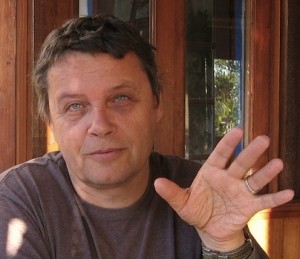
    What is ParaTheatrical ReSearch? When did you become interested in paratheatrical processes?

    The term “paratheatre” was coined in the 1970’s by the late Polish theatre director, Jerzy Grotowski, to address a highly dynamic, visceral approach to performance that erased traditional divisions between spectators and performers. Paratheatre was also executed outdoors in the forests of Poland as non-performance events.

    ParaTheatrical ReSearch is what I call the asocial group ritual dynamics I have been developing since 1977.  Initially inspired by Grotowski’s paratheatrical experiments, I have worked with many groups over thirty-five years to develop my own paratheatre medium incorporating techniques of Zazen meditation, physical theatre, dance, and vocal creations towards accessing and expressing the internal landscape of autonomous forces in the body itself. To me, the physical body “embodies” the Subconscious mind.  People can read more about ParaTheatrical ReSearch at www.paratheatrical.com

    What is the goal of the dreaming ritual?

    I discovered this dreaming ritual in 1986 by piecing together movements I recalled from my nocturnal dreams into a dream choreography that, when performed, triggered the forces, images, visions, and emotions innate to the dreams they originated from.  The following year, I met Aborigine elder Guboo Ted Thomas who initiated me to a new way of seeing the Earth itself as this vast dreaming entity incarnating as a planet. His aboriginal vision of the Daytime/Dreamtime continuum brought new depth to my little dreaming ritual.  You ask about the goal of this dreaming ritual.  The goal may differ for each person but the overall effect of doing it tends to expose the links and overlays between our daytime and dreamtime realities.  It amplifies a unifying influence in our consciousness which I feel is needed in today’s hypermedia fragmented world. You can read more about this dreaming ritual at www.paratheatrical.com/dreamingrites.html

    What was the biggest challenge during the production?

    The biggest production challenge for me personally was shooting all the action on the fly with no rehearsals or second takes.  As the group underwent this paratheatre process, I had to think on my feet and shoot whatever I could using one camera (Canon XL-2 mini-dv).  This was a group of seven previously trained in paratheatre methods who agreed to meet with me one night a week for seven weeks.  The challenge for them was to do this work with someone watching and photographing them under bright lights.  This paratheatre work is usually done in dim light or candlelight with nobody watching.

    Do you hope your film encourages people to think about their own dreams differently? if so, how?

    I hope my experimental documentary inspires people to rethink their dreams in a less interpretive way and more like a rich resource for images, stories, emotions, and raw material for their creative and artistic processes. I am aligned with the Surrealists of the 1920’s who avoided dream analysis in favor of tapping into the personal and collective Unconscious as a wellspring of creativity, shock, and awe..

    What did you personally learn from making this film?

    Every film project is like going to a new film school for me. I learned many things doing this project, like how it’s almost impossible to show the inner workings of this paratheatrical process in video or film.  However, it was well worth doing since certain visceral and spiritual resonances experienced and expressed by the dreaming ritualists can be felt and sensed by the viewing audience.  Even though we may not understand something intellectually, I see value in witnessing and resonating with experiences we do not yet understand.  Technically, I learned how to shoot by my wits more and improvise with the given material with much better results than I’ve had before.  I learned how to make a documentary that also feels like a dream.

    You have been showing your work at ATA on a more or less regular basis. Why do you choose ATA as a film house for your films?

    I have been showing my work here at A.T.A. since 1992 with the S.F. premiere of my first paratheatre video document, “Archaic Community”.  I’m an underground filmmaker and A.T.A. is an underground venue and so, it’s been a good fit so far.  There are other S.F. Bay area venues I show my work but I seem to always return to A.T.A.  I like the unpretentious D.I.Y. spirit and laidback atmosphere here and the friendly down-to-earth people that run it.
    Learn more

  • Meet Our Volunteers

    Each month, we are featuring interviews with the volunteer staff that make ATA possible, recognizing their work at ATA and their contribution to our vibrant artistic community.

    Here is an interview with Dayv Jones who has been a volunteer since the late nineties.


    DAYV JONES13638_241676074831_1097101_n

    How did you first become involved with ATA?

    I wish I could remember the first show I went to at ATA. I was probably still living in the sunset and just happened across the space and immediately felt at home, probably pre-earthquake 1988/1989. Soon after I moved to the mission and ATA quickly became one of my favorite venues in the city, not only for the amazing shows but for the true DIY/punk rock philosophy of the space, something that has become all too rare in this town of late. After getting my first camcorder in 1991, I took advantage of $5 classes learning basic shooting and editing techniques.

    You started volunteering at ATA in the late 90’s. Can you tell us what ATA was like back then?

    One of the first things I did after returning from Boston in 1998  was begin volunteering at ATA. I hadn’t  fully realized it when I first lived in San Francisco but ATA  represents my ideal of what a San Francisco art space should be, and I still believe it is as close to anything that remains here to the international ideal of the spirit of SF. The spirit of the beats, hippies and punks that have helped define what San Francisco means to the world, a global view that few cities have attained, still lives within the walls of ATA if not anywhere else. I believe the reason——- we continue to attract international artists and volunteers is because we imbibe that global ideal – the DIY artist friendly ecotopia myth- of SF’s spirit.

    The space had just gone through a major change when I started  and I was part of an influx of new volunteers. At the time we still had basic video and editing classes and an editing suite, we were open and usually had a volunteer present from 10-10 everyday.  I enjoyed the fact that we were a space where people could learn and create but these aspects of ATA got phased out during the 2000’s as artists were able to do these things at home more easily. Though we have gone from a multi-use facility to mostly a screening space the overall spirit and culture of the space remains unchanged.

    What makes you want to continue to volunteer?

    This is my home, my family. I continue to be inspired by the variety of both people and works that grace our space.

    How has being involved with ATA inspired you as a video artist?

    ATA has inspired me in so many ways. The amazing work of international and local artists and musicians that continue to pass through the space are an endless source of inspiration, as are my fellow volunteers and the amazing work they do. The space itself has offered me the ability to experiment and refine my work in a way that wouldn’t have been available anywhere else. Even the equipment is sometimes inspiring. One late night, about 5 am sometime in 2001, I was working on a piece of looped audio. I had been using this deck for many hours and it started to get tired and began not quite recording the sound right, sort of a warbly stop/start effect that ended up being perfect audio for my piece.

    As part of your job at ATA, you have been running ATV, ATA’s TV show. What is ATV all about?

    ATV began airing on cable access in 1988, when I started volunteering at ATA Sadie Shaw was the point person for the program and handed the reigns to me and Kent Howie in 2001. Over 700 shows have been produced with an amazing array of local and international artists. The next phase of this project is preserving this work and making these shows available online.

    What would you say is needed to be a volunteer here?

    Patience and humor and perhaps a little creativity.

    What is the craziest or coolest thing you have seen at ATA so far?

    I have seen so many great artists, musicians and events it is impossible to just put one. My most vivid memories seem to be the parties, when the staff gets together to just let loose and have fun.


    Volunteer with ATA!

    ATA is looking for volunteers to help with our Gallery and our Screenings. Volunteers run screenings, organize events, curate shows, and get stuff done. Volunteers can come to any ATA show for free. We need people who are creative and reliable.

    Email volunteer@atasite.org and become a part of something good.

  • Flowers

    Flowers are sex.

    Flowers are death.

    Through the month of December Artist’s Television Access will be presenting installation and painting by Vanesa Gingold, exploring stages from blossoming to withering.

    An opening party will be held on December 16th from noon til 4:00 PM.