Angela Simione, I LONG FOR YOU WITHOUT END
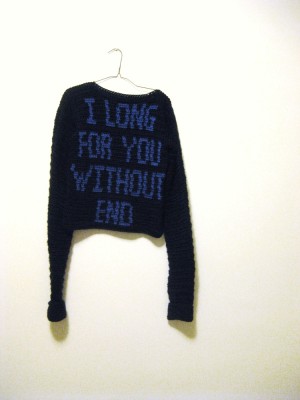
She got sick when I was 29. When I was thirty, she died. It was January. Cold. I curled up with my
crochet hook and I kept my hands busy.
Looking back, I see it as an attempt at repair; each stitch, an act of healing. A simultaneous meditation
and distraction.
In the weeks following her death, I would wake up crying; a mess of sadness. I hid myself. I didn’t want
anyone to see me cry but my confused despair was impossible to hide. I was ashamed of my red eyes.
For as sympathetic as people were, they were equally uncomfortable. I was deep within the landscape
of my mother’s death (and the early confrontation with my own mortality) and I was in it alone.
There are no spaces for these conversations in our culture. No one wants to talk about death over
morning coffee. Or afternoon coffee. Or after-dinner drinks. And after a few weeks, there is a
collective pressure for one to bounce back, for the grieving to subside, for a smile to flicker and pull at
the corners of one’s cheeks again. The pressure to resume one’s previous dance, to return to business
as usual is torturous. I couldn’t stand it. Still, I wore dark sunglasses and waterproof mascara. I tried
hard to contain the mess of my sadness. I tried to control my tears. Sometimes, I would suddenly start
crying on the street. Never wailing or sobbing, no bunched up red face, just tears silently running from
my eyes. The dark glasses and waterproof mascara were my preventative maintenance. They helped
me prevent myself from making other people uncomfortable. They helped me prevent my mother’s
death from spilling on to their lives, such an unwelcome topic, such an inconvenient contagion. They
prevented me from embarrassing myself. Nevertheless, the tears came. An overflow. A mode of
expression that wouldn’t be denied. A supplemental voice.
Eventually, I got angry about the silence but I didn’t know where to go to say the things I needed to say.
I didn’t know where to go to find people who were interested in talking about death and its aftermath.
Behind my dark glasses, I was stoic. Straight-faced. I marched across this city silently, clad in black and
smile-less. I noticed that no matter what I wore or how I looked, someone was bound to notice me. It
was then that I discovered the power of my body to speak for me, to create an area for discussion and
exchange of ideas. My personal billboard. My own private gallery wall. My mobile wailing wall.
Taking phrases from my personal diary, lines from deeply loved songs, and scattered bits of my own
poetry, I began to speak of my mother’s death. I embedded my longing for her in the clothing I wore. I
broadcasted my anguish, my confusion, my loss, my unbelievable anger, and my longing for a reckoning.
I emblazoned my feelings across handmade sweaters, each stitch bearing witness to my silent suffering.
They spoke the words that I couldn’t say without completely falling apart.
Now, 4 years later, the repair that I was attempting feels as if it has largely taken place. Presented at
ATA in their entirely are my “sweaters of death”, a fragmented poem of sorts, my “work of mourning”.
Angela Simione
 OUT HERE is an 89 minute documentary film created by the Queer Farmer Film Project and Directed by Jonah Mossberg. Completed after 4 years in production, it looks at the experiences of queer farmers across the country and asks – what does it mean to be a queer farmer, is agriculture a safe space for queer people, and what are the relationships between food production and queerness? It is the filmmaker’s dream that this project will give voice and visibility to queer people in agriculture and inspire a flagrant national discussion about gender and sexuality as they are related to our food system. Directed by Jonah Mossberg (in person)


