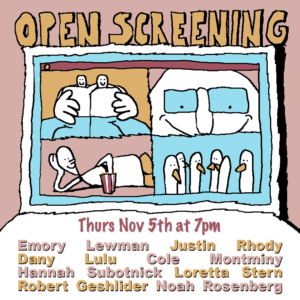
ATA’s first virtual Open Screening is beaming from our computers to yours this Thursday November 5th at 7pm PST! Open Screening is the only monthly open submissions screening in the Bay Area that showcases a diverse pool of up and coming, as well as established filmmakers. So sit back, relax, tune in, drop out, and pop in for some fresh locally made films.
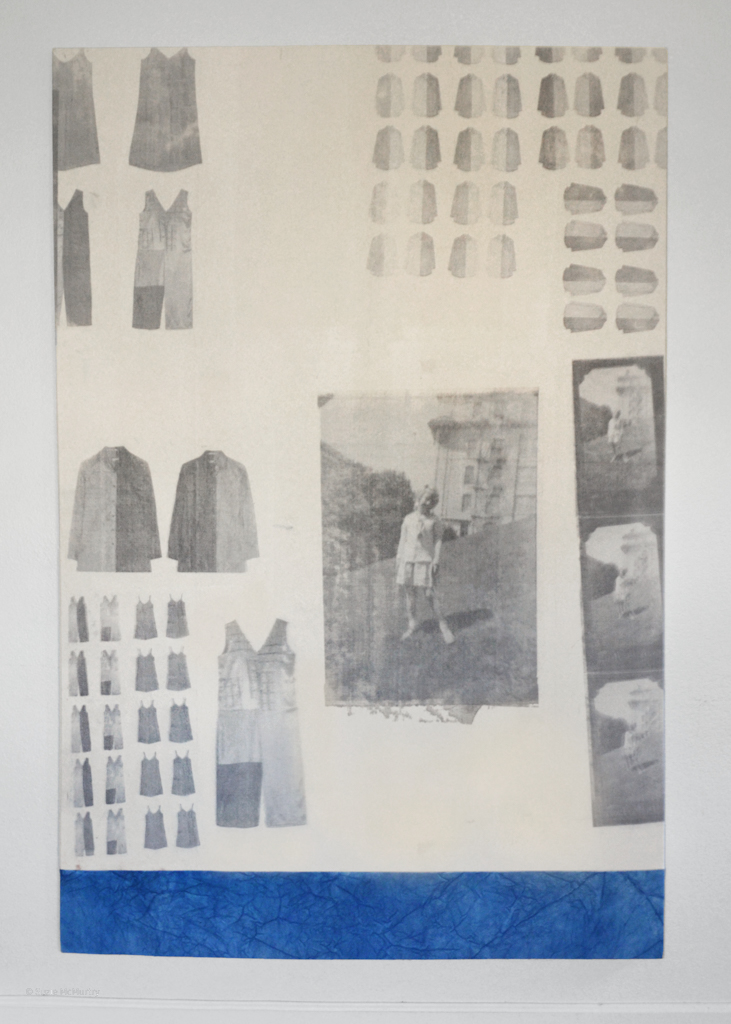
Clothestile I photographic transfer & dye on canvas 48″ x 72″ 2019Me in the Park 1933 graphite, dye, collage & oil on canvas 36″ x 60″ 2019Orange Palm Hearts photographic transfer & dye on canvas 36” x 48” 2020
In the 1950s my grandmother planted a Eucalyptus cinerea, or Silver Dollar Gum, for this purpose. This single act, done almost exactly a century after a similar species was first turned loose in the Bay Area by colonizers who somehow thought it would make good lumber, feels different: isolated. Since she first told me that this tree near her driveway had a unique use, I have been harvesting leaves every few months to dye wool.
The revelation of the orange dye-producing tree coincided with our unearthing of a family loom from the basement about 50 yards away. Although the present pandemic has slowed my ability to weave on that loom in my grandparents’ living space, this extracting, dyeing, projecting and processing of photographs has been a way of asking: what should be done with the physical products of our ancestors’ decisions? These things are not static nor disconnected from larger systems, though they may feel that way to the individual. I’m reminded of this at least every few months when I harvest leaves for another dye bath; the spot on the trunk I’ve taken from has always at least doubled in new growth. . .
Curator’s note: For the show’s duration, McMurtry will seek narratives from the public which engage the show’s themes. To participate, please complete the form here.
artist bio: As an artist and designer, Suzie McMurtry wants to contribute to a future functional circular economy. Her work aims to investigate the desire to create, collect and discard objects while acknowledging the very real need to simply stop. As we build communities that are oriented away from capitalistic individualism, where does self-expression through clothing, artmaking, or collected objects fit in? Can we covet without greed? Collect without hoarding? These questions are what interest her now.
Originally from the San Francisco Bay peninsula, McMurtry graduated from Colorado College with a BA in Studio Art, where she focused on weaving, sculpture, and printmaking. She currently lives in the East Bay (unceded Muwekma Ohlone territory) where she has worked as a teacher, seamster, photographer, and logistics coordinator in sustainable fashion. She will attend Central Saint Martins in October 2020, to pursue a Master’s degree in Material Futures.